
Blog

Your blog category

Digital Marketing Course in Kharghar

How to Build Subscriber Lists, Improve Open Rates and Generate Sales

How to Build Subscriber Lists, Improve Open Rates and Generate Sales Email marketing remains an important part of digital marketing because it allows businesses to communicate directly with people who have shown interest in their products, services or content. While social media platforms help brands reach audiences and search engines attract website visitors, email marketing gives businesses an opportunity to build ongoing relationships with subscribers. However, successful email marketing requires more than sending promotional messages to a large contact list. Businesses need a clear strategy to attract the right subscribers, deliver relevant content, encourage people to open emails and guide them towards meaningful actions. A well-planned email marketing campaign can help a business generate enquiries, promote new products, recover abandoned purchases, announce offers and build customer loyalty. It can also support other marketing channels by bringing interested users back to a website. Whether you are a business owner, marketing professional, freelancer or student learning digital marketing, understanding email campaign strategy is a valuable skill. In this guide, we will explain how to build an email subscriber list, improve open rates, create engaging campaigns, use automation and generate more sales through email marketing. Enroll Now Explore Our Course Related Blogs How to Build Subscriber Lists, Improve Open Rates and Generate Sales 31 October 2026 | by 360digitalmarketinginstitute.com How to Build Subscriber Lists, Improve Open Rates and Generate Sales Email marketing remains an important part of digital marketing… Read More → Google Analytics 4 for Marketers: How to Track Campaign Performance, Conversions and User Behaviour 31 October 2026 | by 360digitalmarketinginstitute.com Google Analytics 4 for Marketers: How to Track Campaign Performance, Conversions and User Behaviour Digital marketing is not just about… Read More → Micro-Influencer Marketing in India: How Small Creators Help Brands Reach the Right Audience 31 October 2026 | by 360digitalmarketinginstitute.com Micro-Influencer Marketing in India: How Small Creators Help Brands Reach the Right Audience Imagine a local fashion brand launching a… Read More → 1. What Is Email Marketing? Email marketing is a digital marketing method that uses email to communicate with subscribers, customers and potential buyers. Businesses use email campaigns to share information, promote products, announce offers, distribute newsletters and maintain relationships with their audiences. Common types of email marketing include: Welcome emails: Introduce a brand to new subscribers. Promotional emails: Share discounts, offers and product announcements. Newsletter emails: Deliver updates, educational content and company news. Lead nurturing emails: Help potential customers understand a product or service. Abandoned cart emails: Remind shoppers about products they left in their shopping carts, where permitted. Customer retention emails: Encourage repeat purchases and continued engagement. Re-engagement emails: Reach subscribers who have stopped interacting with previous campaigns. For example, an educational institute may collect email addresses from visitors interested in digital marketing training. It can then send useful course information, learning tips, upcoming batch announcements and invitations to enquire about admission. The objective is not simply to send more emails. It is to deliver the right message to the right audience at the right time. 2. Why Email Marketing Is Important for Businesses Email marketing can support different stages of the customer journey, from initial awareness to repeat purchases. Direct communication with subscribers Businesses can communicate with people who have voluntarily subscribed to receive updates. This creates a direct communication channel that is not entirely dependent on social media algorithms. Lead generation A business can use email campaigns to nurture people who have downloaded a brochure, registered for a webinar or requested product information. Regular, relevant communication can help these prospects make informed decisions. Customer retention Existing customers may be interested in new products, additional services, loyalty offers or educational resources. Email marketing gives businesses a structured way to maintain these relationships. Cost-effective campaign management Email campaigns can reach a large number of opted-in subscribers without requiring a separate advertising budget for every communication. However, businesses should still consider software, creative production, data management and campaign management costs. Measurable performance Email marketing platforms provide performance information such as delivery, clicks, bounces, unsubscribes and conversions. These metrics help marketers understand how subscribers respond and identify areas for improvement. 3. How to Build a Quality Email Subscriber List A successful email marketing strategy begins with a relevant subscriber list. The quality of the list is more important than the number of email addresses it contains. A smaller audience that genuinely wants to hear from a business can be more valuable than a large list of uninterested contacts. Create a valuable lead magnet A lead magnet is a useful resource offered in exchange for a person’s decision to subscribe. Examples include: Free ebooks Industry guides Checklists Templates Webinars Educational videos Product comparison guides Free consultation sessions Course brochures For example, a digital marketing institute could offer a free guide explaining the essential skills required to begin a digital marketing career. Interested visitors can enter their email addresses through a subscription form to receive the resource. The lead magnet should be relevant to the audience and provide genuine value. Add subscription forms to your website Website forms are one of the most direct ways to collect email subscribers. Useful locations include: Homepage Blog pages Course or service pages Contact pages Resource download pages Relevant landing pages Keep the form simple. In many situations, an email address and a clear subscription option are sufficient. Explain what subscribers will receive and how frequently they can expect communication. Use landing pages for lead generation A dedicated landing page can focus on one specific subscription offer. For example, a business promoting a free marketing webinar can create a landing page with: A clear headline. A short explanation of the webinar. The benefits of attending. A simple registration form. A clear call to action. Removing unnecessary distractions can make it easier for visitors to complete the subscription process. Collect subscribers through social media Businesses can promote newsletters, downloadable resources and webinar registrations through social media platforms. For example, an Instagram post can invite followers to subscribe to receive weekly marketing tips. The

How to Build Subscriber Lists, Improve Open Rates and Generate Sales Read More »
Digital Marketing Course in Kharghar

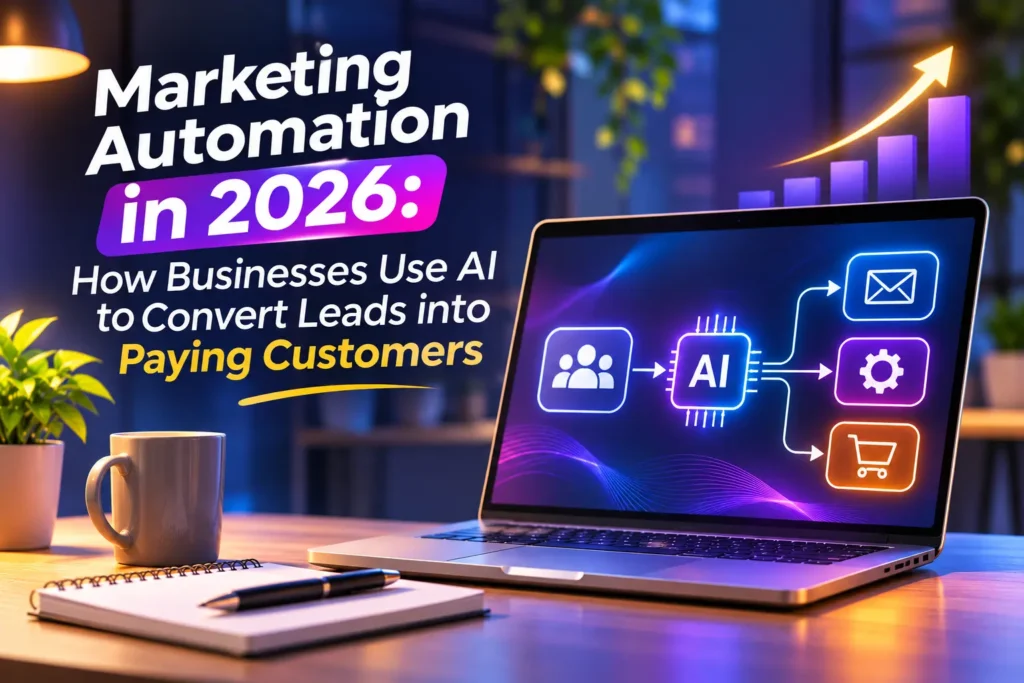
Marketing Automation in 2026: How Businesses Use AI to Convert Leads into Paying Customers

Marketing Automation in 2026: How Businesses Use AI to Convert Leads into Paying Customers Imagine a business receiving 100 enquiries every day through its website, social media accounts, advertisements, and WhatsApp. Responding to every potential customer manually, following up with interested prospects, and tracking their buying decisions can quickly become difficult. This is where marketing automation becomes valuable. It helps businesses manage repetitive marketing activities, communicate with potential customers, organise leads, and improve the customer journey through automated workflows. In 2026, artificial intelligence is making these processes more intelligent. Businesses can use AI-powered tools to understand customer behaviour, personalise communication, identify promising leads, and deliver relevant messages at the right time. For companies investing in digital marketing, understanding automation is becoming an important competitive advantage. Professionals learning through a Digital Marketing Course in Kharghar can benefit from understanding how AI, customer relationship management (CRM), email marketing, and automated lead generation work together. But marketing automation is not simply about sending automatic emails. It is about creating a connected marketing system that moves potential customers from their first interaction to a purchase. Enroll Now Explore Our Course Related Blogs How to Build Subscriber Lists, Improve Open Rates and Generate Sales 31 October 2026 | by 360digitalmarketinginstitute.com How to Build Subscriber Lists, Improve Open Rates and Generate Sales Email marketing remains an important part of digital marketing… Read More → Google Analytics 4 for Marketers: How to Track Campaign Performance, Conversions and User Behaviour 31 October 2026 | by 360digitalmarketinginstitute.com Google Analytics 4 for Marketers: How to Track Campaign Performance, Conversions and User Behaviour Digital marketing is not just about… Read More → Micro-Influencer Marketing in India: How Small Creators Help Brands Reach the Right Audience 31 October 2026 | by 360digitalmarketinginstitute.com Micro-Influencer Marketing in India: How Small Creators Help Brands Reach the Right Audience Imagine a local fashion brand launching a… Read More → 1. What Is Marketing Automation and How Does It Work? Marketing automation refers to using software and technology to perform repetitive marketing activities automatically. These activities include sending emails, capturing website enquiries, segmenting audiences, scheduling follow-ups, tracking customer interactions, and managing leads. Traditional automation follows predefined rules. For example, when someone fills out a contact form, the system automatically sends a confirmation email. AI-powered marketing automation goes further. It can analyse customer behaviour, identify patterns, recommend relevant content, and help determine which prospects are more likely to purchase. Consider an educational institute receiving enquiries about digital marketing courses. Instead of manually contacting every person, its automated system can: Capture enquiries through website forms and advertisements. Store contact information in a CRM. Send an instant acknowledgement. Identify the course or service the prospect is interested in. Schedule relevant follow-up messages. Notify the admissions team when a prospect shows strong buying intent. This approach reduces repetitive work and helps businesses maintain consistent communication with potential customers. According to IBM’s 2026 explanation of AI marketing automation, combining customer data, machine learning, and predictive analytics allows businesses to make more informed marketing decisions. IBM+1 2. How AI Is Changing Marketing Automation in 2026 AI is changing how businesses plan campaigns, communicate with customers, and manage sales opportunities. Previously, marketing automation mainly depended on fixed conditions. A customer would receive the same follow-up email after completing a particular action. Now, AI can help businesses adapt communication based on customer interests, previous interactions, engagement levels, and buying behaviour. Some important developments include: AI-powered customer segmentation: AI analyses customer information to identify groups with similar interests, requirements, and purchasing patterns. Predictive lead scoring: Machine learning can help estimate which prospects are more likely to become customers based on available engagement and historical data. Personalised communication: Businesses can create more relevant email messages, product recommendations, and promotional content. AI chatbots and virtual assistants: Automated assistants can answer common questions, collect enquiry details, and direct conversations to the appropriate team. AI agents: More advanced systems can perform multiple connected tasks, such as researching customer information, updating CRM records, and preparing follow-up recommendations within approved permissions. The shift towards AI is supported by current industry research. Salesforce reported in July 2026 that 81% of marketers in India had adopted AI, while identifying fragmented customer data as an important challenge. Salesforce+1 For businesses and professionals, the important lesson is that AI works best when connected to reliable customer information and a clearly defined marketing strategy. 3. How Businesses Capture and Organise Leads Automatically Lead generation is the first important stage of the marketing automation process. A lead is someone who has shown interest in a business, product, or service by sharing contact information or interacting with a marketing channel. Businesses generate leads through multiple sources: Website enquiry forms. Google Ads and Meta Ads. Social media campaigns. Landing pages and downloadable brochures. WhatsApp conversations. Email subscriptions. Webinars and online registrations. Managing enquiries from different platforms manually can lead to missed opportunities. Automation helps collect and organise these enquiries in one place. For example, a business running advertisements on Facebook and Google can connect its lead forms to a CRM platform. Whenever someone submits an enquiry, their information can automatically enter the system. The CRM can record details such as name, email address, phone number, enquiry source, interested service, and communication history. Businesses can then assign leads to specific sales representatives and create follow-up tasks. A training institute targeting students interested in a Digital Marketing Course in Kharghar or a Digital Marketing Course in Panvel can use this process to organise enquiries according to course interest and preferred location. The result is a more structured lead management process where fewer enquiries get lost between marketing and sales teams. 4. AI-Powered Lead Scoring: Identify Customers Who Are Ready to Buy Not every enquiry represents the same level of purchasing interest. Some people are simply researching their options, while others are actively comparing prices and preparing to make a purchase. Lead scoring helps businesses prioritise prospects based on their likelihood of converting. Traditional lead scoring uses predefined points. For example: Customer

Marketing Automation in 2026: How Businesses Use AI to Convert Leads into Paying Customers Read More »

Digital Marketing Course in Kharghar

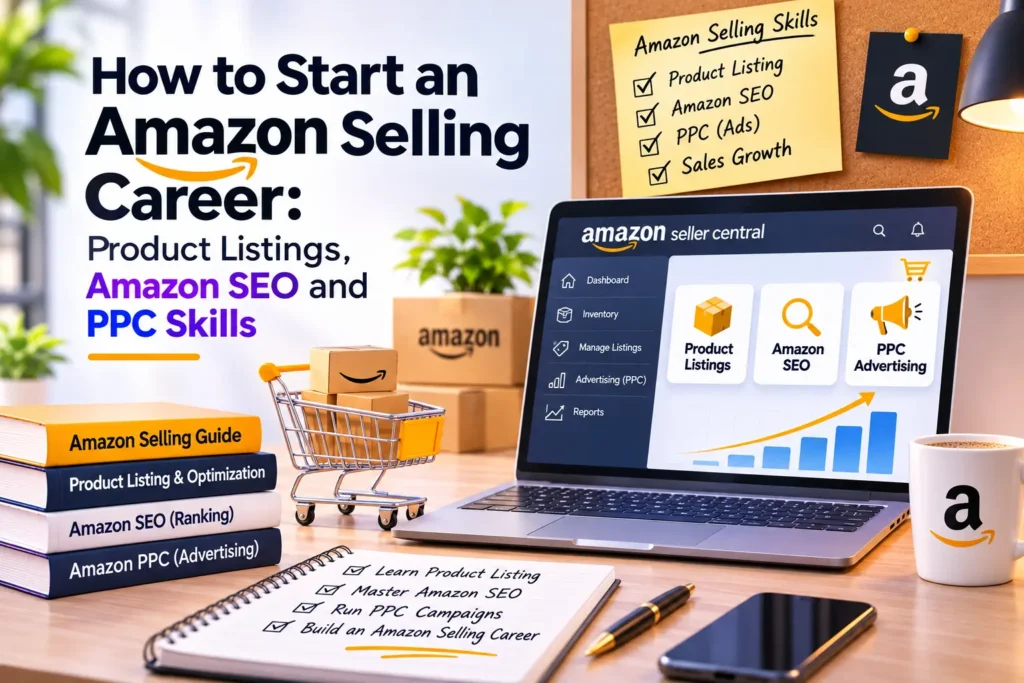
How to Start an Amazon Selling Career: Product Listings, Amazon SEO and PPC Skills

How to Start an Amazon Selling Career: Product Listings, Amazon SEO and PPC Skills Amazon has created exciting opportunities for individuals who want to build an online business, work in e-commerce, or develop a career in digital marketing. From selling handmade products to managing established brands, Amazon offers different ways to reach customers through an online marketplace. However, success requires more than uploading products. Sellers must understand product research, listing optimisation, advertising, pricing, inventory management, and customer service. If you want to build a career in this growing industry, learning practical e-commerce and marketing skills can help you get started. Students exploring a Digital Marketing Course in Kharghar can benefit from understanding how online marketplaces attract customers, generate sales, and build brand visibility. This guide explains how to start an Amazon selling career, create effective product listings, learn Amazon SEO, use PPC advertising, and develop the skills needed for long-term growth. Enroll Now Explore Our Course Related Blogs How to Build Subscriber Lists, Improve Open Rates and Generate Sales 31 October 2026 | by 360digitalmarketinginstitute.com How to Build Subscriber Lists, Improve Open Rates and Generate Sales Email marketing remains an important part of digital marketing… Read More → Google Analytics 4 for Marketers: How to Track Campaign Performance, Conversions and User Behaviour 31 October 2026 | by 360digitalmarketinginstitute.com Google Analytics 4 for Marketers: How to Track Campaign Performance, Conversions and User Behaviour Digital marketing is not just about… Read More → Micro-Influencer Marketing in India: How Small Creators Help Brands Reach the Right Audience 31 October 2026 | by 360digitalmarketinginstitute.com Micro-Influencer Marketing in India: How Small Creators Help Brands Reach the Right Audience Imagine a local fashion brand launching a… Read More → 1. Understand How Amazon Selling Works Before starting your journey, understand how Amazon connects sellers with customers. Sellers list their products on the marketplace, and customers discover them through searches, recommendations, and advertisements. Depending on their business model, sellers may handle storage and shipping themselves or use Amazon fulfilment services where available. There are several ways to participate in the Amazon ecosystem: Individual seller: Sell products independently without necessarily building a large brand. Private-label seller: Develop your own brand and sell products under your brand name. Wholesale seller: Purchase genuine products from authorised suppliers and resell them, subject to marketplace policies. E-commerce account manager: Help businesses manage listings, inventory, orders, and account performance. Amazon advertising specialist: Manage sponsored advertising campaigns and optimize advertising performance. A learner considering a Digital Marketing Course in Panvel should explore these career options before deciding whether to become a seller, work for an e-commerce company, or offer marketplace management services. 2. Research Products Before Investing Money Product research is one of the most important steps in starting an Amazon business. Choosing a product only because it looks popular can lead to high competition, low profit margins, or unsold inventory. Start by identifying customer problems and products that offer practical solutions. Research customer reviews, competing listings, pricing patterns, product features, and seasonal demand. Look for opportunities where you can offer better quality, clearer information, improved packaging, or a more useful product variation. Consider these factors during product research: Demand: Are customers actively searching for the product? Competition: How many established sellers offer similar products? Profit margin: Can you earn a reasonable profit after all expenses? Shipping: Is the product easy and economical to store and transport? Restrictions: Does the category require approval or additional documentation? Returns: Is the product likely to generate frequent returns or complaints? Students researching an Amazon E-commerce Course in Kharghar and Panvel should practise evaluating products using spreadsheets and marketplace research tools before investing money. Remember that sales estimates and keyword tools provide indications rather than guaranteed results. Begin with a manageable budget, verify supplier quality, and avoid purchasing large quantities before validating demand. 3. Set Up Your Amazon Seller Account After selecting a potential product, review the seller registration requirements for your intended Amazon marketplace. In India, this generally involves providing the required identity, contact, bank, and tax information, depending on your business structure and product category. Before registering, prepare the necessary documents and understand the applicable GST requirements. GST registration and other compliance obligations can vary depending on the product, transaction type, and current regulations. Verify the latest requirements through official sources or a qualified tax professional. Once your account is approved, familiarise yourself with the seller dashboard. Learn how to create listings, monitor orders, manage inventory, respond to customers, review account health, and track payments. A structured Digital Marketing Institute in Kharghar can be a useful starting point for learners who want to understand how e-commerce operations connect with marketing, analytics, and customer acquisition. Do not overlook marketplace policies. Product authenticity, intellectual property, customer communication, restricted products, and fulfilment standards all affect account health. Building compliant practices from the beginning helps reduce avoidable problems. 4. Create Product Listings That Convert A product listing is your digital storefront. It must help customers understand what the product does, why it is useful, and whether it meets their needs. A listing that is unclear or incomplete can lose sales even when the product itself is good. Write a clear product title Your title should communicate the product name, brand, important specifications, and relevant attributes. Include the main search term naturally while following the current title requirements for your category. Avoid unnecessary repetition, exaggerated claims, and promotional language that violates marketplace rules. Develop informative bullet points Use bullet points to explain the most important product benefits. Cover materials, dimensions, compatibility, included accessories, usage instructions, and other relevant details. Instead of making vague claims such as “best quality product,” explain the specific feature that makes the product useful. Write a helpful product description A good description answers customer questions before they purchase. Explain how the product works, who it is designed for, how to use it, and what customers should know before ordering. Use simple language and organise information into readable sections. Never make unsupported claims or copy competitors’ descriptions.

How to Start an Amazon Selling Career: Product Listings, Amazon SEO and PPC Skills Read More »

Can AI-Generated Content Rank on Google in 2026? What Marketers Should Know

Can AI-Generated Content Rank on Google in 2026? What Marketers Should Know Artificial intelligence has changed the way marketers create content. From writing blog posts and product descriptions to generating social media ideas and SEO outlines, AI tools can now help businesses produce content faster than ever. But one question continues to come up among website owners, SEO professionals, students, and digital marketers: Can AI-generated content rank on Google in 2026? The short answer is yes, AI-assisted content can appear in Google Search. However, simply generating an article with AI and publishing it does not guarantee rankings. Google’s focus remains on the quality, usefulness, relevance, and overall value of content rather than whether a human or an AI tool produced the initial draft. For marketers, this means the real skill is no longer simply knowing how to generate content with AI. It is knowing how to use AI while maintaining quality, originality, expertise, and search intent. Enroll Now Explore Our Course Related Blogs Why Digital Marketing Is a High-Demand Skill for Students and Professionals 20 September 2026 | by 360digitalmarketinginstitute.com Why Digital Marketing Is a High-Demand Skill for Students and Professionals Digital marketing has become one of the most valuable… Read More → Can AI-Generated Content Rank on Google in 2026? What Marketers Should Know 3 September 2026 | by 360digitalmarketinginstitute.com Can AI-Generated Content Rank on Google in 2026? What Marketers Should Know Artificial intelligence has changed the way marketers create… Read More → How to Make Your Website Visible in ChatGPT, Gemini & Google AI Searc 1 September 2026 | by 360digitalmarketinginstitute.com How to Make Your Website Visible in ChatGPT, Gemini & Google AI Search The way people search for information is… Read More → Can AI-generated content rank on Google in 2026? The short answer is yes, AI-assisted content can appear in Google Search. However, simply generating an article with AI and publishing it does not guarantee rankings. Google’s focus remains on the quality, usefulness, relevance, and overall value of content rather than whether a human or an AI tool produced the initial draft. For marketers, this means the real skill is no longer simply knowing how to generate content with AI. It is knowing how to use AI while maintaining quality, originality, expertise, and search intent. What Is AI-Generated Content? AI-generated content is content created wholly or partially with artificial intelligence tools. Marketers may use AI for: Blog outlines Article drafts Keyword research Content ideas Meta descriptions Social media posts Email campaigns Product descriptions Ad copy Content optimisation Research assistance However, there is an important difference between AI-generated content and AI-assisted content. AI-generated content may be produced almost entirely by an AI system. AI-assisted content uses AI as a tool while a human contributes research, experience, editing, analysis, examples, and final quality control. For SEO, that distinction can be important because useful content needs to provide genuine value rather than simply filling a webpage with automatically generated text. Can AI Content Rank on Google in 2026? Yes. Google does not simply exclude a webpage because AI was used to create it. The important question is: Does the content provide useful and reliable information to the person searching for it? Google’s guidance has consistently focused on creating helpful, reliable, people-first content. It also warns against producing large amounts of low-value content primarily to manipulate search rankings. Therefore, an AI-assisted article can potentially rank when it: Satisfies search intent Provides accurate information Adds genuine value Demonstrates relevant expertise Is original rather than repetitive Is well structured Provides a good user experience Fits naturally within the website’s overall topic The problem isn’t necessarily AI. The problem is low-quality content created without adding value. Why Some AI Content Fails to Rank One of the biggest mistakes marketers make is assuming that AI can replace the entire SEO process. For example, a marketer might enter: “Write a 1,500-word article about digital marketing.” The AI produces an article. The marketer publishes it without researching the audience, checking facts, adding original examples, or improving the content. The result may be grammatically correct but still provide little value. Common problems include: Generic Information AI can produce information that is already available on hundreds of other websites. If your article simply repeats common definitions, there may be little reason for users—or search engines—to prefer it. Lack of First-Hand Experience A generic AI article may explain what SEO is, but it cannot automatically provide your actual experience teaching SEO to students or working on real campaigns. First-hand experience can make content more useful and distinctive. Incorrect or Outdated Information AI-generated content can contain inaccurate or outdated information. This is particularly important for rapidly changing areas such as: SEO Google algorithms AI tools Social media Digital advertising Marketing platforms Human review remains important. Keyword Stuffing Using AI to generate hundreds of pages targeting variations of the same keyword can create thin or repetitive content. For example: Digital marketing course in Panvel Best digital marketing course in Panvel Digital marketing training in Panvel Digital marketing classes in Panvel Digital marketing institute in Panvel These can be useful topics when they represent genuinely different search intent, but simply creating near-identical pages for every variation can weaken the overall content strategy. Digital Marketing And AI & Professional Courses in Kharghar Explore industry-focused certification courses that combine practical training, AI-powered tools, live projects, and placement assistance to help you build a successful career in today’s digital world. Digital Marketing Master Digital Marketing Course in Kharghar with practical training and live projects. ⭐ SEO & AI SEO Training ⭐ Google Ads & Meta Ads ⭐ Live Client Projects ⭐ Google & Meta Certifications ⭐ Placement Assistance Explore Course Amazon eCommerce Learn Amazon selling, product listing, PPC advertising, and marketplace business management professionally. ⭐ Amazon Seller Central ⭐ Product Listing & SEO ⭐ Amazon PPC Advertising ⭐ Live Marketplace Projects ⭐ Industry Certification Explore Course Graphic Designing Master creative graphic designing using Photoshop, Illustrator, Canva, branding, and AI design tools. ⭐ Photoshop &

Can AI-Generated Content Rank on Google in 2026? What Marketers Should Know Read More »

Social Media SEO in 2026: How to Get Found on Instagram, YouTube & LinkedIn Without Going Viral

Social Media SEO in 2026: How to Get Found on Instagram, YouTube & LinkedIn Without Going Viral Going viral can bring thousands or even millions of views, but it is not the only way to get discovered on social media. In 2026, people increasingly use platforms such as Instagram, YouTube, and LinkedIn to search for information, discover businesses, find creators, learn new skills, and research products and services. This is where social media SEO becomes important. Instead of creating content and simply hoping that an algorithm recommends it, social media SEO focuses on making your content easier for both users and platform search systems to understand and discover. The goal is not necessarily to get millions of views. The goal is to get found by the right audience. Enroll Now Explore Our Course Related Blogs Social Media SEO in 2026: How to Get Found on Instagram, YouTube & LinkedIn Without Going Viral Social Media SEO in 2026: How to Get Found on Instagram, YouTube & LinkedIn Without Going Viral Going viral can… Read More → Will AI Replace Digital Marketing Jobs in 2026? Skills You Need to Stay Ahead Will AI Replace Digital Marketing Jobs in 2026? Skills You Need to Stay Ahead Artificial intelligence has changed the way… Read More → Digital Marketing Jobs in 2026: Top Roles, Skills, Salaries & How to Get Started Digital Marketing Jobs in 2026: Top Roles, Skills, Salaries & How to Get Started Digital marketing has become one of… Read More → What Is Social Media SEO? Social media SEO is the process of optimizing your social media profiles and content so they have a better chance of appearing when people search within social platforms. It includes activities such as: Optimizing your profile Using relevant keywords Writing searchable captions and descriptions Adding relevant hashtags Optimizing video titles Creating content around search intent Using clear topic signals Maintaining consistent content themes Building engagement and authority Traditional SEO focuses heavily on search engines such as Google, while social media SEO focuses on discovery within platforms such as Instagram, YouTube, and LinkedIn. The principles are different, but one idea remains the same: Make it easy for the platform and the user to understand what your content is about. Why Social Media SEO Matters in 2026 Social media is no longer used only for entertainment and networking. Users are increasingly searching directly on platforms for tutorials, reviews, recommendations, educational content, professionals, businesses, and solutions to specific problems. For example, someone looking for SEO advice might search for: SEO tips for beginners Local SEO strategies How to improve Google rankings SEO tools Digital marketing tips If your content clearly addresses these topics, it has an opportunity to be discovered through search even if your account does not have a massive following. This makes search optimization particularly useful for small businesses, professionals, educators, creators, and personal brands. Instagram SEO in 2026 Instagram has evolved beyond a platform where users simply scroll through photos and videos. Search and discovery play an important role in how people find accounts and content. 1. Optimize Your Instagram Profile Your profile should clearly communicate what you do. Your name field, username, bio, and category can help establish relevance. For example, if you provide digital marketing training, your profile should make that clear instead of using only a brand slogan. Use relevant terms naturally in your profile so users immediately understand your expertise. 2. Use Keywords in Captions Instagram captions should not be written only for engagement. Include the primary topic or keyword naturally in the caption. Instead of writing a vague caption such as: “Want better results? Try this!” A more descriptive caption could explain exactly what the content covers: “Here are five Instagram SEO tips to help businesses improve their content discoverability.” The second version gives both users and search systems stronger context. 3. Create Search-Friendly Content Think about what your audience is actually searching for. Content ideas could include: Instagram SEO tips How to optimize an Instagram profile Instagram content ideas for businesses Instagram marketing mistakes How to get more profile visits Answering specific questions can help your content remain discoverable beyond its initial publication. 4. Use Relevant Hashtags Hashtags can still provide additional context and discovery opportunities when used appropriately. Rather than adding a large collection of unrelated hashtags, use a smaller set that accurately describes the topic, industry, audience, or location. The focus should be relevance over quantity. YouTube SEO: Getting Discovered Without Going Viral YouTube is one of the strongest examples of social media functioning as a search engine. People actively search YouTube for tutorials, reviews, explanations, demonstrations, courses, and solutions. That makes YouTube SEO essential for creators and businesses that want long-term content discovery. 1. Research Search Intent Before creating a video, understand what your audience wants to find. For example: How to learn digital marketing How SEO works Google Ads tutorial for beginners Social media marketing strategies How to create an SEO strategy The closer your content matches the actual search intent, the more useful it can be to viewers. 2. Write Descriptive Video Titles Your video title should clearly communicate what the viewer will learn. Instead of: “You Won’t Believe This SEO Trick!” Consider: “SEO for Beginners: 10 Practical SEO Tips to Improve Your Website” The second title is more descriptive and gives YouTube and users clearer information about the video’s subject. 3. Optimize Video Descriptions Use the description to explain what the video covers. Include relevant terms naturally, summarize important sections, and provide useful information about the content. Avoid filling descriptions with repetitive keywords. The objective is to improve clarity, not manipulate search. 4. Use Relevant Video Chapters For longer videos, chapters can help viewers navigate specific sections. They also make the content easier to understand because viewers can quickly identify the topics covered in the video. 5. Focus on Viewer Satisfaction SEO can help people discover a video, but the quality of the video determines whether they continue watching. Strong YouTube content should

Social Media SEO in 2026: How to Get Found on Instagram, YouTube & LinkedIn Without Going Viral Read More »

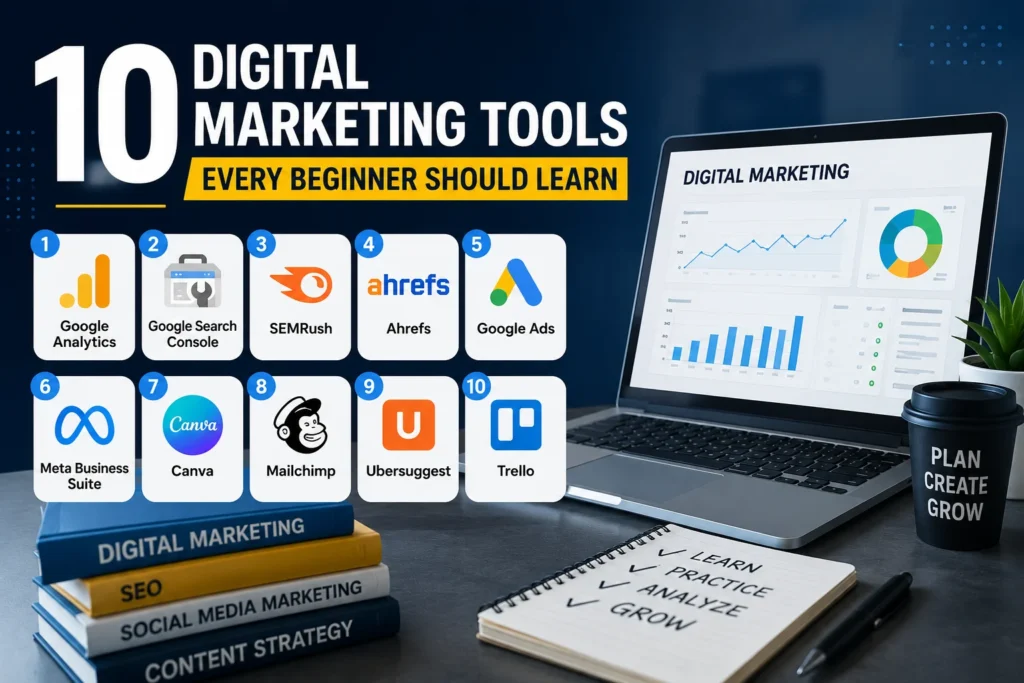
10 Digital Marketing Tools Every Beginner Should Learn

10 Digital Marketing Tools Every Beginner Should Learn Digital marketing involves many different activities, including SEO, paid advertising, social media, content creation, analytics, and campaign management. Learning the right tools can help beginners understand how digital marketing works in practice and make it easier to measure results. You do not need to learn dozens of platforms at once. Start with the essential tools, understand what each one does, and practise using them on real or sample projects. Here are 10 digital marketing tools every beginner should learn. Enroll Now Or Explore Our Course Related Blogs How Local SEO Helps Navi Mumbai Businesses Get More Customers From Google 19 August 2026 | by 360digitalmarketinginstitute.com How Local SEO Helps Navi Mumbai Businesses Get More Customers From Google When people need a product or service nearby,… Read More → Freelance Digital Marketing vs Agency Jobs in Navi Mumbai: Which Career Path Is Better? 19 August 2026 | by 360digitalmarketinginstitute.com Freelance Digital Marketing vs Agency Jobs in Navi Mumbai: Which Career Path Is Better? Digital marketing has become an attractive… Read More → Digital Marketing vs Traditional Marketing: What Works Better for Navi Mumbai Businesses? 19 August 2026 | by 360digitalmarketinginstitute.com Digital Marketing vs Traditional Marketing: What Works Better for Navi Mumbai Businesses? Navi Mumbai has developed into one of Maharashtra’s… Read More → 1. Google Analytics Google Analytics helps you understand what visitors do on your website. You can use it to analyse website traffic, traffic sources, user behaviour, landing pages, engagement, and conversions. For a digital marketer, analytics is important because it helps answer questions such as: How many people are visiting the website? Where are visitors coming from? Which pages receive the most traffic? Which marketing channels generate results? Are visitors completing important actions? Learning Google Analytics is useful for almost every digital marketing career path. 2. Google Search Console Google Search Console is an essential tool for SEO. It provides information about how a website appears in Google Search, including search queries, clicks, impressions, average positions, indexing issues, and page performance. Beginners can use Search Console to identify keywords bringing traffic to a website and discover technical or indexing problems that may affect search visibility. 3. Google Ads Google Ads is one of the most important platforms for paid search marketing. It allows businesses to display advertisements when potential customers search for relevant products or services. Beginners should learn the basics of: Keyword targeting Search campaigns Ad copy Bidding Conversion tracking Campaign optimization Understanding Google Ads can help you pursue careers in performance marketing and paid advertising. 4. Semrush Semrush is a popular digital marketing platform with tools for SEO, keyword research, competitor analysis, content marketing, and website auditing. Beginners can use it to research keywords, analyse competitors, identify content opportunities, and understand a website’s search performance. Although many advanced features are paid, learning how professional SEO platforms work is valuable for anyone planning an SEO career. 5. Ahrefs Ahrefs is another widely used SEO platform. It is particularly useful for keyword research, backlink analysis, competitor research, content research, and website analysis. Learning Ahrefs can help beginners understand how websites compete in search results and how backlinks contribute to SEO. 6. Canva Not every digital marketer needs to be a professional graphic designer, but understanding basic visual content creation is useful. Canva makes it easier to create social media posts, advertisements, presentations, thumbnails, banners, and other marketing materials. Learning basic design principles along with Canva can help digital marketers create better-performing content. 7. Meta Business Suite Meta Business Suite helps businesses manage their Facebook and Instagram presence. Digital marketers can use it to manage content, schedule posts, respond to messages, and review performance data. Beginners interested in social media marketing should become familiar with Meta’s business tools and understand how organic content and paid advertising work together. 8. Mailchimp Email marketing remains an important digital marketing channel. Mailchimp provides tools for creating email campaigns, managing subscribers, designing newsletters, and analysing email performance. Learning the fundamentals of email marketing can help beginners understand how businesses nurture leads and communicate with existing customers. 9. Ubersuggest Ubersuggest is a useful tool for beginners exploring SEO and keyword research. It can provide keyword ideas, search volume information, SEO difficulty estimates, content ideas, and competitor insights. It can be a convenient starting point for learning how keyword research works before moving into more advanced SEO platforms. 10. Trello Digital marketing involves managing many activities at the same time. Trello can help marketers organize campaigns, content calendars, tasks, and projects. For example, a content team can use Trello to track articles from research and writing through editing, publishing, and promotion. Good project management skills are especially important when working with multiple clients or marketing channels. What Is Digital Marketing? Digital marketing is the process of promoting a business, product or service through digital channels. Some of the major areas of digital marketing include: Search Engine Optimization (SEO) Social Media Marketing Google Ads and Pay-Per-Click Advertising Content Marketing Email Marketing Website Marketing Local SEO E-commerce Marketing Analytics and Conversion Tracking AI-powered marketing Unlike traditional marketing, digital marketing allows businesses to reach specific audiences, measure campaigns and understand how people interact with their online presence. How Should Beginners Learn These Tools? Trying to master all 10 tools at once can become overwhelming. Instead, start with the tools that match your career goal. If you are interested in SEO, begin with Google Search Console, Google Analytics, Semrush, Ahrefs, and Ubersuggest. If you are interested in social media marketing, focus on Canva and Meta Business Suite. If you want to work in performance marketing, start with Google Ads and Google Analytics. Most importantly, practise these tools using real projects. Create a website, analyse its traffic, research keywords, build a content plan, or create a sample advertising campaign. Start Learning Digital Marketing Digital marketing tools are valuable because they allow marketers to research, execute, measure, and improve their strategies. However, knowing how to operate a tool is not enough. You

10 Digital Marketing Tools Every Beginner Should Learn Read More »