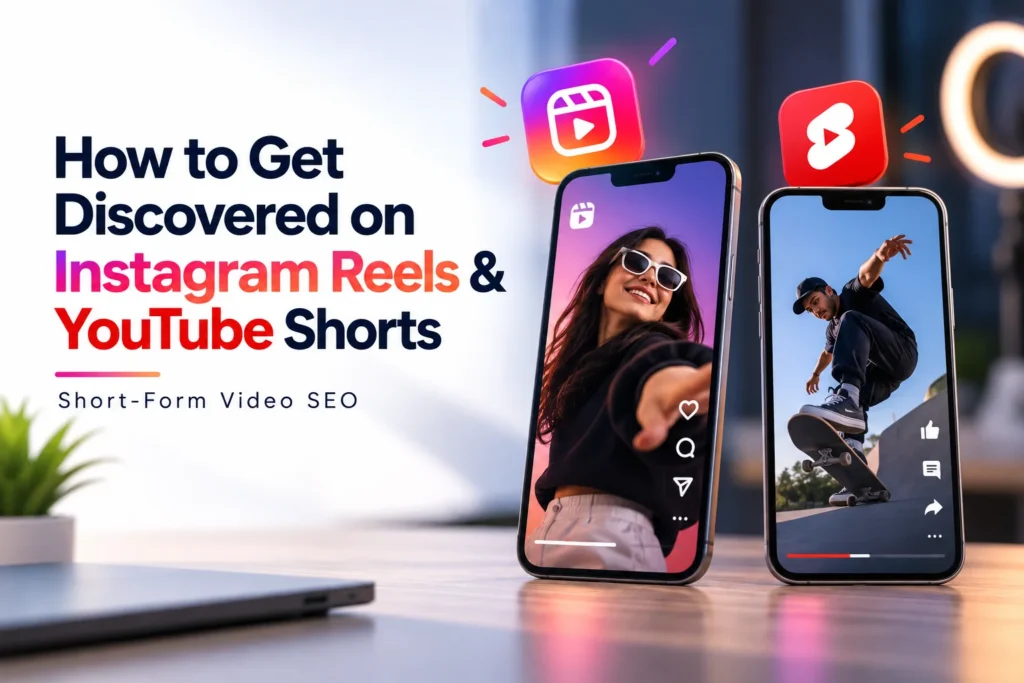
Short-Form Video SEO: How Instagram Reels & YouTube Shorts Get Discovered
How to get discovered on instagram Reels & youtube shorts. Short-Form Video SEO: Short-form video has become one of the most important content formats in digital marketing. Instagram Reels and YouTube Shorts allow businesses, creators, educators, and marketers to reach audiences through short, engaging videos. But creating a good video is only half the job. The bigger question is: How do people discover your videos? This is where Video SEO comes into play. Video SEO is the process of optimising video content so that platforms such as Instagram and YouTube can better understand the topic, audience, and relevance of a video. For businesses and digital marketing professionals in Panvel, Kharghar, and Navi Mumbai, understanding Video SEO can help turn short-form videos into an important part of a broader social media marketing and digital marketing strategy. Enroll Now Explore Our Course Related Blogs Why Digital Marketing Is a High-Demand Skill for Students and Professionals 20 September 2026 | by 360digitalmarketinginstitute.com Why Digital Marketing Is a High-Demand Skill for Students and Professionals Digital marketing has become one of the most valuable… Read More → Short-Form Video SEO: How Instagram Reels & YouTube Shorts Get Discovered 9 September 2026 | by 360digitalmarketinginstitute.com How to get discovered on instagram Reels & youtube shorts. Short-Form Video SEO: Short-form video has become one of the… Read More → How Gen Z Is Changing Digital Marketing Strategies in 2026 7 September 2026 | by 360digitalmarketinginstitute.com How Gen Z Is Changing Digital Marketing Strategies in 2026 Gen Z is changing the way people discover brands, consume… Read More → What Is Video SEO? Video SEO involves optimising your video and the information around it to improve its chances of being discovered. This can include: Video titles Descriptions Keywords Captions Hashtags On-screen text Spoken content Topics Engagement Audience retention Video structure Channel or profile relevance Video SEO is not about inserting keywords everywhere. The goal is to help the platform understand: What is this video about? Who is it useful for? The clearer the context, the easier it can be for the platform to match the content with relevant users. Why Short-Form Video SEO Matters in 2026 People don’t only use Google Search to discover information anymore. They also search and discover content through: Instagram YouTube TikTok Facebook LinkedIn Google Search For example, someone interested in learning SEO may search Google for: “SEO course in Panvel” But they may also discover an SEO educator through an Instagram Reel or YouTube Short explaining: “3 SEO mistakes beginners make.” This means social media platforms are becoming important discovery channels alongside traditional Google Search. How Instagram Reels Get Discovered Instagram uses multiple signals to determine which content to show to users. The exact ranking system is complex and constantly evolving, but creators can improve discoverability by making the topic of their content clear and producing content that people actually want to watch and interact with. 1. Start With a Clear Topic A Reel should communicate its subject quickly. Instead of a vague opening such as: “You won’t believe this!” try something more descriptive: “3 SEO mistakes local businesses make.” The second version immediately tells the viewer what the video is about. 2. Use Relevant Keywords Instagram content can be discovered through search. Include your primary topic naturally in: Caption On-screen text Spoken words Profile description where relevant For example, a digital marketing educator could create a Reel around: “Digital Marketing Course in Panvel: 5 Skills Beginners Should Learn.” The words and context surrounding the video help communicate its topic. 3. Add Captions Captions improve accessibility and make videos easier to understand when users watch without sound. They can also reinforce the topic of the video. For educational Reels, use concise captions that highlight the main points rather than placing large amounts of text on the screen. 4. Use Relevant Hashtags Hashtags can help categorise content, but they shouldn’t be treated as a substitute for good content. Instead of adding dozens of unrelated hashtags, use a small number of highly relevant ones. For example: #DigitalMarketing #SEO #Panvel #NaviMumbai #Marketing The exact hashtags should match the content. 5. Encourage Meaningful Engagement Comments, shares, saves, and other interactions can indicate that viewers find a piece of content useful or interesting. Educational content can encourage engagement by asking relevant questions. For example: “Which SEO skill do you want to learn next?” This is more useful than asking users to comment something unrelated simply to increase engagement. How YouTube Shorts Get Discovered YouTube is fundamentally a search and recommendation platform, making Video SEO particularly important. YouTube can use information such as: Title Description Video content Captions Viewer behaviour Engagement Topic relevance Channel information to understand and recommend videos. 1. Write Descriptive Titles Your title should clearly communicate what the Short is about. Instead of: “Learn This Before Starting!” try: “5 SEO Skills Every Beginner Should Learn in 2026” The second title gives both the viewer and the platform much more context. 2. Put the Main Topic Early If your Short is about: Google Search SEO make that topic clear in the title, spoken content, and description. For example: “Google Search SEO: 3 Things Beginners Need to Know.” This creates a clear connection between the video and the subject. 3. Use a Useful Description Even though Shorts are short videos, the description can provide additional context. Include: What the video covers Relevant keywords Related topics Useful links where appropriate Don’t turn the description into a list of repeated keywords. 4. Focus on Viewer Retention Getting someone to click or watch the first few seconds isn’t enough. The video needs to keep their attention. A simple structure can work well: Hook → Information → Example → Takeaway For example: Hook:“Your local business may be losing Google searches because of this SEO mistake.” Information:Explain the mistake. Example:Show what businesses should do instead. Takeaway:Give one practical action. This structure works particularly well for educational content. Digital Marketing And AI & Professional Courses in Kharghar Explore industry-focused certification courses that combine
Short-Form Video SEO: How Instagram Reels & YouTube Shorts Get Discovered Read More »