
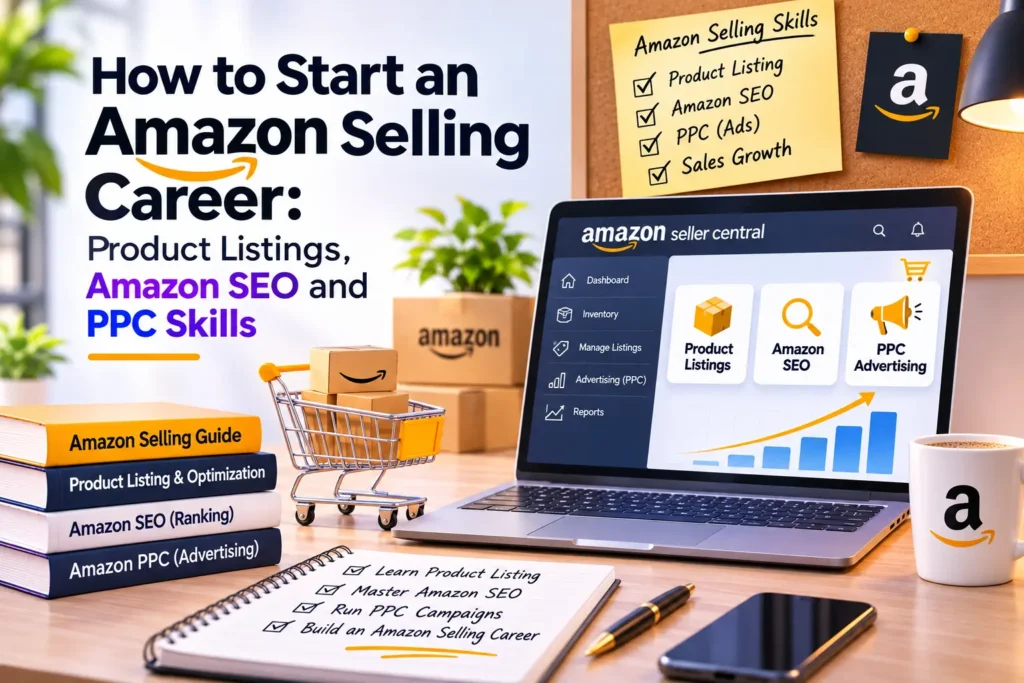
How to Start an Amazon Selling Career: Product Listings, Amazon SEO and PPC Skills
How to Start an Amazon Selling Career: Product Listings, Amazon SEO and PPC Skills Amazon has created exciting opportunities for individuals who want to build an online business, work in e-commerce, or develop a career in digital marketing. From selling handmade products to managing established brands, Amazon offers different ways to reach customers through an online marketplace. However, success requires more than uploading products. Sellers must understand product research, listing optimisation, advertising, pricing, inventory management, and customer service. If you want to build a career in this growing industry, learning practical e-commerce and marketing skills can help you get started. Students exploring a Digital Marketing Course in Kharghar can benefit from understanding how online marketplaces attract customers, generate sales, and build brand visibility. This guide explains how to start an Amazon selling career, create effective product listings, learn Amazon SEO, use PPC advertising, and develop the skills needed for long-term growth. Enroll Now Explore Our Course Related Blogs How to Build Subscriber Lists, Improve Open Rates and Generate Sales 31 October 2026 | by 360digitalmarketinginstitute.com How to Build Subscriber Lists, Improve Open Rates and Generate Sales Email marketing remains an important part of digital marketing… Read More → Google Analytics 4 for Marketers: How to Track Campaign Performance, Conversions and User Behaviour 31 October 2026 | by 360digitalmarketinginstitute.com Google Analytics 4 for Marketers: How to Track Campaign Performance, Conversions and User Behaviour Digital marketing is not just about… Read More → Micro-Influencer Marketing in India: How Small Creators Help Brands Reach the Right Audience 31 October 2026 | by 360digitalmarketinginstitute.com Micro-Influencer Marketing in India: How Small Creators Help Brands Reach the Right Audience Imagine a local fashion brand launching a… Read More → 1. Understand How Amazon Selling Works Before starting your journey, understand how Amazon connects sellers with customers. Sellers list their products on the marketplace, and customers discover them through searches, recommendations, and advertisements. Depending on their business model, sellers may handle storage and shipping themselves or use Amazon fulfilment services where available. There are several ways to participate in the Amazon ecosystem: Individual seller: Sell products independently without necessarily building a large brand. Private-label seller: Develop your own brand and sell products under your brand name. Wholesale seller: Purchase genuine products from authorised suppliers and resell them, subject to marketplace policies. E-commerce account manager: Help businesses manage listings, inventory, orders, and account performance. Amazon advertising specialist: Manage sponsored advertising campaigns and optimize advertising performance. A learner considering a Digital Marketing Course in Panvel should explore these career options before deciding whether to become a seller, work for an e-commerce company, or offer marketplace management services. 2. Research Products Before Investing Money Product research is one of the most important steps in starting an Amazon business. Choosing a product only because it looks popular can lead to high competition, low profit margins, or unsold inventory. Start by identifying customer problems and products that offer practical solutions. Research customer reviews, competing listings, pricing patterns, product features, and seasonal demand. Look for opportunities where you can offer better quality, clearer information, improved packaging, or a more useful product variation. Consider these factors during product research: Demand: Are customers actively searching for the product? Competition: How many established sellers offer similar products? Profit margin: Can you earn a reasonable profit after all expenses? Shipping: Is the product easy and economical to store and transport? Restrictions: Does the category require approval or additional documentation? Returns: Is the product likely to generate frequent returns or complaints? Students researching an Amazon E-commerce Course in Kharghar and Panvel should practise evaluating products using spreadsheets and marketplace research tools before investing money. Remember that sales estimates and keyword tools provide indications rather than guaranteed results. Begin with a manageable budget, verify supplier quality, and avoid purchasing large quantities before validating demand. 3. Set Up Your Amazon Seller Account After selecting a potential product, review the seller registration requirements for your intended Amazon marketplace. In India, this generally involves providing the required identity, contact, bank, and tax information, depending on your business structure and product category. Before registering, prepare the necessary documents and understand the applicable GST requirements. GST registration and other compliance obligations can vary depending on the product, transaction type, and current regulations. Verify the latest requirements through official sources or a qualified tax professional. Once your account is approved, familiarise yourself with the seller dashboard. Learn how to create listings, monitor orders, manage inventory, respond to customers, review account health, and track payments. A structured Digital Marketing Institute in Kharghar can be a useful starting point for learners who want to understand how e-commerce operations connect with marketing, analytics, and customer acquisition. Do not overlook marketplace policies. Product authenticity, intellectual property, customer communication, restricted products, and fulfilment standards all affect account health. Building compliant practices from the beginning helps reduce avoidable problems. 4. Create Product Listings That Convert A product listing is your digital storefront. It must help customers understand what the product does, why it is useful, and whether it meets their needs. A listing that is unclear or incomplete can lose sales even when the product itself is good. Write a clear product title Your title should communicate the product name, brand, important specifications, and relevant attributes. Include the main search term naturally while following the current title requirements for your category. Avoid unnecessary repetition, exaggerated claims, and promotional language that violates marketplace rules. Develop informative bullet points Use bullet points to explain the most important product benefits. Cover materials, dimensions, compatibility, included accessories, usage instructions, and other relevant details. Instead of making vague claims such as “best quality product,” explain the specific feature that makes the product useful. Write a helpful product description A good description answers customer questions before they purchase. Explain how the product works, who it is designed for, how to use it, and what customers should know before ordering. Use simple language and organise information into readable sections. Never make unsupported claims or copy competitors’ descriptions.
How to Start an Amazon Selling Career: Product Listings, Amazon SEO and PPC Skills Read More »