Digital Marketing

Digital Marketing Blogs

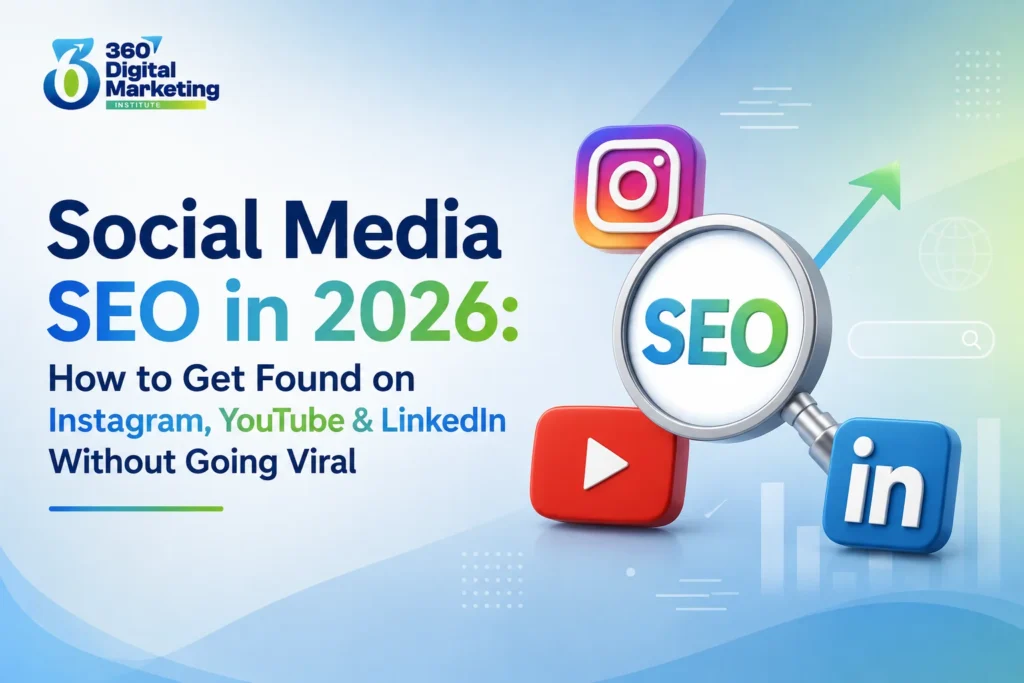
Social Media SEO in 2026: How to Get Found on Instagram, YouTube & LinkedIn Without Going Viral

Social Media SEO in 2026: How to Get Found on Instagram, YouTube & LinkedIn Without Going Viral Going viral can bring thousands or even millions of views, but it is not the only way to get discovered on social media. In 2026, people increasingly use platforms such as Instagram, YouTube, and LinkedIn to search for information, discover businesses, find creators, learn new skills, and research products and services. This is where social media SEO becomes important. Instead of creating content and simply hoping that an algorithm recommends it, social media SEO focuses on making your content easier for both users and platform search systems to understand and discover. The goal is not necessarily to get millions of views. The goal is to get found by the right audience. Enroll Now Explore Our Course Related Blogs Social Media SEO in 2026: How to Get Found on Instagram, YouTube & LinkedIn Without Going Viral Social Media SEO in 2026: How to Get Found on Instagram, YouTube & LinkedIn Without Going Viral Going viral can… Read More → Will AI Replace Digital Marketing Jobs in 2026? Skills You Need to Stay Ahead Will AI Replace Digital Marketing Jobs in 2026? Skills You Need to Stay Ahead Artificial intelligence has changed the way… Read More → Digital Marketing Jobs in 2026: Top Roles, Skills, Salaries & How to Get Started Digital Marketing Jobs in 2026: Top Roles, Skills, Salaries & How to Get Started Digital marketing has become one of… Read More → What Is Social Media SEO? Social media SEO is the process of optimizing your social media profiles and content so they have a better chance of appearing when people search within social platforms. It includes activities such as: Optimizing your profile Using relevant keywords Writing searchable captions and descriptions Adding relevant hashtags Optimizing video titles Creating content around search intent Using clear topic signals Maintaining consistent content themes Building engagement and authority Traditional SEO focuses heavily on search engines such as Google, while social media SEO focuses on discovery within platforms such as Instagram, YouTube, and LinkedIn. The principles are different, but one idea remains the same: Make it easy for the platform and the user to understand what your content is about. Why Social Media SEO Matters in 2026 Social media is no longer used only for entertainment and networking. Users are increasingly searching directly on platforms for tutorials, reviews, recommendations, educational content, professionals, businesses, and solutions to specific problems. For example, someone looking for SEO advice might search for: SEO tips for beginners Local SEO strategies How to improve Google rankings SEO tools Digital marketing tips If your content clearly addresses these topics, it has an opportunity to be discovered through search even if your account does not have a massive following. This makes search optimization particularly useful for small businesses, professionals, educators, creators, and personal brands. Instagram SEO in 2026 Instagram has evolved beyond a platform where users simply scroll through photos and videos. Search and discovery play an important role in how people find accounts and content. 1. Optimize Your Instagram Profile Your profile should clearly communicate what you do. Your name field, username, bio, and category can help establish relevance. For example, if you provide digital marketing training, your profile should make that clear instead of using only a brand slogan. Use relevant terms naturally in your profile so users immediately understand your expertise. 2. Use Keywords in Captions Instagram captions should not be written only for engagement. Include the primary topic or keyword naturally in the caption. Instead of writing a vague caption such as: “Want better results? Try this!” A more descriptive caption could explain exactly what the content covers: “Here are five Instagram SEO tips to help businesses improve their content discoverability.” The second version gives both users and search systems stronger context. 3. Create Search-Friendly Content Think about what your audience is actually searching for. Content ideas could include: Instagram SEO tips How to optimize an Instagram profile Instagram content ideas for businesses Instagram marketing mistakes How to get more profile visits Answering specific questions can help your content remain discoverable beyond its initial publication. 4. Use Relevant Hashtags Hashtags can still provide additional context and discovery opportunities when used appropriately. Rather than adding a large collection of unrelated hashtags, use a smaller set that accurately describes the topic, industry, audience, or location. The focus should be relevance over quantity. YouTube SEO: Getting Discovered Without Going Viral YouTube is one of the strongest examples of social media functioning as a search engine. People actively search YouTube for tutorials, reviews, explanations, demonstrations, courses, and solutions. That makes YouTube SEO essential for creators and businesses that want long-term content discovery. 1. Research Search Intent Before creating a video, understand what your audience wants to find. For example: How to learn digital marketing How SEO works Google Ads tutorial for beginners Social media marketing strategies How to create an SEO strategy The closer your content matches the actual search intent, the more useful it can be to viewers. 2. Write Descriptive Video Titles Your video title should clearly communicate what the viewer will learn. Instead of: “You Won’t Believe This SEO Trick!” Consider: “SEO for Beginners: 10 Practical SEO Tips to Improve Your Website” The second title is more descriptive and gives YouTube and users clearer information about the video’s subject. 3. Optimize Video Descriptions Use the description to explain what the video covers. Include relevant terms naturally, summarize important sections, and provide useful information about the content. Avoid filling descriptions with repetitive keywords. The objective is to improve clarity, not manipulate search. 4. Use Relevant Video Chapters For longer videos, chapters can help viewers navigate specific sections. They also make the content easier to understand because viewers can quickly identify the topics covered in the video. 5. Focus on Viewer Satisfaction SEO can help people discover a video, but the quality of the video determines whether they continue watching. Strong YouTube content should
Social Media SEO in 2026: How to Get Found on Instagram, YouTube & LinkedIn Without Going Viral Read More »

10 Digital Marketing Tools Every Beginner Should Learn

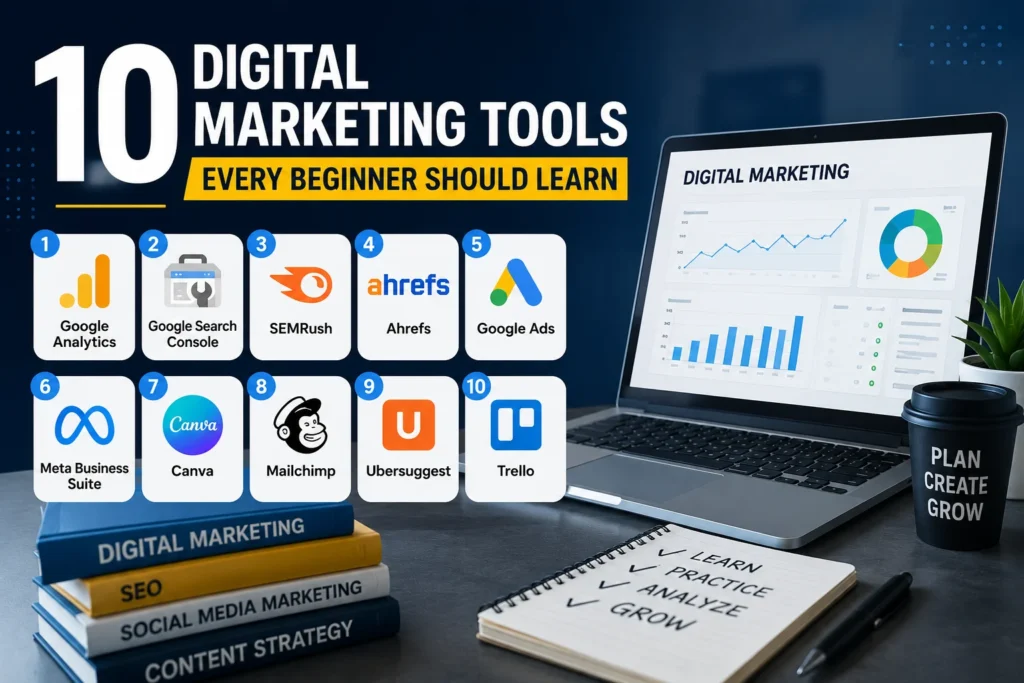
10 Digital Marketing Tools Every Beginner Should Learn Digital marketing involves many different activities, including SEO, paid advertising, social media, content creation, analytics, and campaign management. Learning the right tools can help beginners understand how digital marketing works in practice and make it easier to measure results. You do not need to learn dozens of platforms at once. Start with the essential tools, understand what each one does, and practise using them on real or sample projects. Here are 10 digital marketing tools every beginner should learn. Enroll Now Or Explore Our Course Related Blogs How Local SEO Helps Navi Mumbai Businesses Get More Customers From Google 19 August 2026 | by 360digitalmarketinginstitute.com How Local SEO Helps Navi Mumbai Businesses Get More Customers From Google When people need a product or service nearby,… Read More → Freelance Digital Marketing vs Agency Jobs in Navi Mumbai: Which Career Path Is Better? 19 August 2026 | by 360digitalmarketinginstitute.com Freelance Digital Marketing vs Agency Jobs in Navi Mumbai: Which Career Path Is Better? Digital marketing has become an attractive… Read More → Digital Marketing vs Traditional Marketing: What Works Better for Navi Mumbai Businesses? 19 August 2026 | by 360digitalmarketinginstitute.com Digital Marketing vs Traditional Marketing: What Works Better for Navi Mumbai Businesses? Navi Mumbai has developed into one of Maharashtra’s… Read More → 1. Google Analytics Google Analytics helps you understand what visitors do on your website. You can use it to analyse website traffic, traffic sources, user behaviour, landing pages, engagement, and conversions. For a digital marketer, analytics is important because it helps answer questions such as: How many people are visiting the website? Where are visitors coming from? Which pages receive the most traffic? Which marketing channels generate results? Are visitors completing important actions? Learning Google Analytics is useful for almost every digital marketing career path. 2. Google Search Console Google Search Console is an essential tool for SEO. It provides information about how a website appears in Google Search, including search queries, clicks, impressions, average positions, indexing issues, and page performance. Beginners can use Search Console to identify keywords bringing traffic to a website and discover technical or indexing problems that may affect search visibility. 3. Google Ads Google Ads is one of the most important platforms for paid search marketing. It allows businesses to display advertisements when potential customers search for relevant products or services. Beginners should learn the basics of: Keyword targeting Search campaigns Ad copy Bidding Conversion tracking Campaign optimization Understanding Google Ads can help you pursue careers in performance marketing and paid advertising. 4. Semrush Semrush is a popular digital marketing platform with tools for SEO, keyword research, competitor analysis, content marketing, and website auditing. Beginners can use it to research keywords, analyse competitors, identify content opportunities, and understand a website’s search performance. Although many advanced features are paid, learning how professional SEO platforms work is valuable for anyone planning an SEO career. 5. Ahrefs Ahrefs is another widely used SEO platform. It is particularly useful for keyword research, backlink analysis, competitor research, content research, and website analysis. Learning Ahrefs can help beginners understand how websites compete in search results and how backlinks contribute to SEO. 6. Canva Not every digital marketer needs to be a professional graphic designer, but understanding basic visual content creation is useful. Canva makes it easier to create social media posts, advertisements, presentations, thumbnails, banners, and other marketing materials. Learning basic design principles along with Canva can help digital marketers create better-performing content. 7. Meta Business Suite Meta Business Suite helps businesses manage their Facebook and Instagram presence. Digital marketers can use it to manage content, schedule posts, respond to messages, and review performance data. Beginners interested in social media marketing should become familiar with Meta’s business tools and understand how organic content and paid advertising work together. 8. Mailchimp Email marketing remains an important digital marketing channel. Mailchimp provides tools for creating email campaigns, managing subscribers, designing newsletters, and analysing email performance. Learning the fundamentals of email marketing can help beginners understand how businesses nurture leads and communicate with existing customers. 9. Ubersuggest Ubersuggest is a useful tool for beginners exploring SEO and keyword research. It can provide keyword ideas, search volume information, SEO difficulty estimates, content ideas, and competitor insights. It can be a convenient starting point for learning how keyword research works before moving into more advanced SEO platforms. 10. Trello Digital marketing involves managing many activities at the same time. Trello can help marketers organize campaigns, content calendars, tasks, and projects. For example, a content team can use Trello to track articles from research and writing through editing, publishing, and promotion. Good project management skills are especially important when working with multiple clients or marketing channels. What Is Digital Marketing? Digital marketing is the process of promoting a business, product or service through digital channels. Some of the major areas of digital marketing include: Search Engine Optimization (SEO) Social Media Marketing Google Ads and Pay-Per-Click Advertising Content Marketing Email Marketing Website Marketing Local SEO E-commerce Marketing Analytics and Conversion Tracking AI-powered marketing Unlike traditional marketing, digital marketing allows businesses to reach specific audiences, measure campaigns and understand how people interact with their online presence. How Should Beginners Learn These Tools? Trying to master all 10 tools at once can become overwhelming. Instead, start with the tools that match your career goal. If you are interested in SEO, begin with Google Search Console, Google Analytics, Semrush, Ahrefs, and Ubersuggest. If you are interested in social media marketing, focus on Canva and Meta Business Suite. If you want to work in performance marketing, start with Google Ads and Google Analytics. Most importantly, practise these tools using real projects. Create a website, analyse its traffic, research keywords, build a content plan, or create a sample advertising campaign. Start Learning Digital Marketing Digital marketing tools are valuable because they allow marketers to research, execute, measure, and improve their strategies. However, knowing how to operate a tool is not enough. You

10 Digital Marketing Tools Every Beginner Should Learn Read More »