How to Build Subscriber Lists, Improve Open Rates and Generate Sales
How to Build Subscriber Lists, Improve Open Rates and Generate Sales Email marketing remains an important part of digital marketing...
Read More →
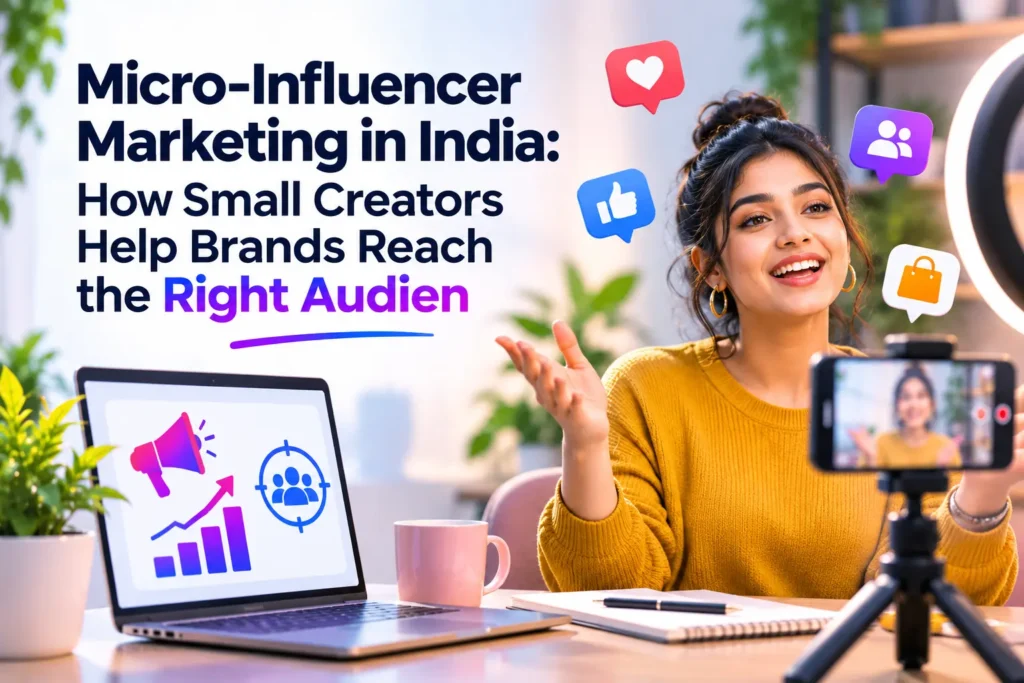
Imagine a local fashion brand launching a new collection. Instead of spending a large advertising budget on a celebrity with millions of followers, the brand collaborates with five Instagram creators who regularly share fashion recommendations with a highly engaged audience.
Each creator produces authentic content, demonstrates the products, answers followers’ questions, and encourages people to explore the brand.
The result? The business reaches people who are genuinely interested in its products rather than simply collecting views from a large audience.
This is the growing opportunity behind micro-influencer marketing in India.
Influencer marketing has become an important part of modern digital marketing because consumers increasingly discover products, services, and brands through social media creators. However, businesses are learning that follower count alone does not determine campaign success.
Smaller creators often have specialised audiences, stronger community relationships, and the ability to communicate with followers in a relatable way.
For startups, local businesses, educational institutes, e-commerce companies, and established brands, micro-influencer collaborations can offer an effective way to build awareness and connect with relevant customers.
In this blog, we will explore what micro-influencer marketing means, why Indian brands are adopting it, how businesses can select the right creators, and how to measure campaign performance.
Micro-influencer marketing is a promotional strategy in which businesses collaborate with content creators who have relatively small but focused social media audiences.
A commonly used classification places micro-influencers in the range of approximately 10,000 to 100,000 followers. However, follower categories vary between platforms and industry reports.
These creators generally focus on particular interests or communities, such as:
Unlike celebrity influencers who appeal to broad audiences, micro-influencers often develop communities around specific interests.
For example, a food creator who regularly reviews restaurants in Navi Mumbai may be more relevant to a restaurant operating in that area than a celebrity with millions of followers across India.
The value comes from audience relevance, credibility, content quality, and engagement rather than follower numbers alone.
India has a diverse digital audience with different languages, cultures, interests, and purchasing preferences.
A marketing campaign designed for a metropolitan audience may not produce the same results in smaller cities or regional markets.
Micro-influencers help brands reach these specific communities through relatable content and local knowledge.
According to Kofluence’s 2026 influencer marketing research, India’s influencer marketing industry is estimated at approximately ₹3,500 crore in annual spending. The report also highlights the increasing importance of long-term creator partnerships and data-driven campaign management.
The Economic Times reported in May 2026 that the Indian influencer marketing sector could reach ₹4,500–5,000 crore by 2027, reflecting the growing commercial importance of the creator economy.
Several factors are contributing to this growth:
Regional content consumption: Creators producing content in Hindi, Marathi, Tamil, Bengali, and other regional languages can connect with audiences more naturally.
Niche communities: Brands can reach people interested in specific products, services, and lifestyle categories.
Accessible collaborations: Smaller creators may offer more flexible partnership opportunities for businesses with limited marketing budgets.
Authentic communication: Personal recommendations and practical demonstrations can help audiences understand products more effectively.
Multiple content formats: Instagram Reels, YouTube videos, Stories, and other formats allow brands to communicate their messages in different ways.
For businesses, this creates opportunities to move beyond broad advertising and build relationships with relevant audience segments.
One of the biggest advantages of micro-influencers is their specialised audience.
A fitness creator attracts people interested in exercise, nutrition, and healthy lifestyles. A technology creator connects with people who regularly explore gadgets, software, and digital products.
This makes it easier for brands to identify creators whose followers match their target customers.
For example, a company selling skincare products can collaborate with beauty creators who regularly discuss skincare routines and product reviews.
Instead of promoting products to everyone, the business reaches people who are more likely to be interested in the offering.
Micro-influencers often interact regularly with their followers through comments, messages, polls, and question-and-answer sessions.
These interactions help creators build recognisable online communities.
When a creator recommends a product or shares a genuine experience, followers may consider that recommendation as part of their purchasing research.
However, trust should never be assumed simply because an influencer has a smaller audience. Brands should review the quality of interactions, audience authenticity, and content history before starting a collaboration.
Collaborating with a celebrity or macro-influencer can require a substantial marketing budget.
Micro-influencer campaigns may provide more flexible opportunities, particularly for small businesses and startups.
Depending on the creator, collaboration arrangements may include:
There is no universal fixed price for a micro-influencer. Costs depend on content format, audience quality, niche, engagement, production requirements, usage rights, and exclusivity.
Brands should compare the expected campaign value rather than selecting creators purely because they charge less.
A creator who regularly discusses a particular subject understands the type of content their audience expects.
For example, a travel creator can demonstrate how a travel accessory works during a trip, while a technology creator can explain the practical benefits of a new gadget.
This makes product communication more contextual.
Instead of presenting a traditional advertisement, the brand becomes part of content that audiences already enjoy consuming.
Micro-influencers can be particularly valuable for businesses targeting specific locations.
A restaurant, coaching institute, salon, gym, or retail store can collaborate with creators who have followers in the same geographical area.
For example, a local business in Kharghar may work with Navi Mumbai lifestyle creators to promote an event or special offer.
Regional collaborations can help businesses reach audiences who are more likely to visit a physical location or enquire about a local service.
Influencer collaborations can produce useful content assets, including product photographs, short videos, demonstrations, tutorials, and customer-style reviews.
With suitable permission and usage rights, businesses may repurpose this content across their social media pages, websites, advertisements, and promotional campaigns.
This can reduce the pressure on internal marketing teams to create every piece of content from scratch.
One sponsored post may create awareness, but repeated collaborations can help build familiarity with a brand.
A creator who genuinely understands a product can explain its features, demonstrate different uses, and answer common audience questions over time.
Kofluence’s 2026 report found that 62.1% of surveyed brand professionals agreed or strongly agreed that long-term creator relationships deliver better ROI than one-off partnerships.
This supports the importance of building consistent creator relationships rather than treating influencer marketing as a one-time promotional activity.
Creators often receive direct feedback from followers through comments and messages.
Businesses can use these conversations to understand customer preferences, common concerns, product expectations, and buying objections.
For example, a beauty brand may discover that customers want more information about ingredients, application methods, or suitability for different skin types.
This feedback can support product development, content planning, and customer service improvements.
Micro-influencer marketing is not limited to brand awareness.
Depending on campaign design, it can support:
The campaign objective should be defined before selecting creators and creating promotional content.
The best platform depends on your target audience, industry, content format, and campaign objectives.
Instagram is particularly useful for lifestyle, fashion, food, beauty, travel, and consumer brands.
Businesses can collaborate with creators through Reels, Stories, carousels, product demonstrations, and partnership advertisements.
YouTube works well for detailed product reviews, educational content, tutorials, comparisons, and demonstrations.
Creators can explain product features in greater depth than short-form content generally allows.
LinkedIn is useful for B2B companies, professional services, software businesses, education providers, and entrepreneurship-focused brands.
Industry specialists and professional creators can help businesses reach decision-makers and relevant professional communities.
Businesses targeting regional audiences can explore relevant Indian content platforms and creator communities.
Language, audience location, content quality, and platform suitability should guide the selection.
A business should not choose a platform simply because it is popular. It should choose the platform where its potential customers actively consume relevant content.
Choosing the right creator is one of the most important steps in campaign planning.
A creator with 20,000 relevant and active followers may provide more value than someone with 100,000 followers who rarely reaches your target audience.
Use the following process:
Step 1: Define your target audience
Identify your ideal customers based on age group, location, interests, language, and purchasing behaviour.
Step 2: Identify relevant niches
Find creators who regularly publish content related to your product or service.
Step 3: Check audience authenticity
Review follower patterns, engagement quality, suspicious activity, and the relevance of comments.
Step 4: Analyse previous brand collaborations
Check whether sponsored content appears natural and whether the creator communicates product information clearly.
Step 5: Review engagement quality
Look beyond likes. Examine meaningful comments, saves, shares, audience questions, and the creator’s interaction with followers.
Step 6: Discuss campaign expectations
Agree on deliverables, content formats, timelines, fees, disclosure requirements, usage rights, and performance tracking.
Step 7: Run a small pilot campaign
Start with a limited collaboration and evaluate the results before increasing your investment.
A structured selection process reduces the risk of spending money on creators whose audiences do not match your business objectives.
Explore industry-focused certification courses that combine practical training, AI-powered tools, live projects, and placement assistance to help you build a successful career in today’s digital world.
Master Digital Marketing Course in Kharghar with practical training and live projects.
Learn Amazon selling, product listing, PPC advertising, and marketplace business management professionally.
Master creative graphic designing using Photoshop, Illustrator, Canva, branding, and AI design tools.

Learn modern UI/UX design using Figma, prototyping, wireframing, and responsive design principles.
All courses are available at our Digital Marketing Institute in Kharghar, Navi Mumbai, with practical training, industry-recognized certifications, and placement assistance.
Micro-influencer marketing is not limited to large brands. Local businesses can use it to connect with potential customers within a specific community.
Here are some practical examples.
Educational institutes: Collaborate with education and career creators who share information about courses, practical training, and career opportunities.
Restaurants and cafes: Invite local food creators to experience the menu and share genuine reviews.
Fashion retailers: Work with local fashion creators to demonstrate new collections and styling ideas.
Fitness businesses: Collaborate with fitness professionals who can explain training programs and membership benefits.
E-commerce brands: Partner with niche product reviewers who can demonstrate product features and answer common questions.
Beauty businesses: Work with skincare and beauty creators to demonstrate product usage and share genuine experiences.
For a business targeting customers in Kharghar and Panvel, regional creators can help communicate offers and services to audiences in nearby communities.
The key is to select creators based on location and audience relevance, not just their total follower count.
A successful influencer campaign should have measurable objectives.
Before launching a campaign, decide whether your primary goal is awareness, engagement, website traffic, leads, or sales.
Important performance indicators include:
KPI | What it measures |
Reach | Number of unique accounts reached |
Impressions | Total content displays |
Engagement Rate | Audience interactions relative to a defined base |
Shares and Saves | Content sharing and saving activity |
Link Clicks | Visitors directed to your website |
Leads Generated | Enquiries collected |
Conversion Rate | Percentage of visitors completing the desired action |
Cost Per Lead | Campaign cost per generated lead |
Return on Investment | Financial return relative to campaign investment |
Use unique tracking links, UTM parameters, creator-specific discount codes, and dedicated landing pages to understand which collaborations generate valuable traffic and conversions.
For example, if three creators promote the same product, assign each creator a different tracking link.
You can then compare website visits, enquiries, and purchases generated by each collaboration.
Do not judge campaign success only through likes and follower growth. The most valuable result depends on your actual business objective.
Even a well-funded campaign can underperform if businesses make avoidable mistakes.
Choosing creators only by follower count: Audience relevance and engagement quality are more important than a large number of followers.
Ignoring fake engagement: Artificial likes and followers can make a creator’s account appear more influential than it actually is.
Using overly scripted content: Creators should understand the brand message but retain their natural communication style.
Not defining campaign objectives: Without clear goals, it becomes difficult to evaluate results.
Ignoring advertising disclosures: Paid and incentivised collaborations must be communicated transparently.
Not agreeing on content rights: Brands should clarify whether they can reuse creator content in advertisements or on their own platforms.
Expecting immediate sales: Some campaigns build awareness and consideration before generating purchases.
Failing to track results: Without campaign-level measurement, businesses cannot identify which creators deliver meaningful value.
Avoiding these mistakes can improve campaign planning and create stronger relationships between brands and creators.
Transparency is essential in influencer marketing.
The Advertising Standards Council of India (ASCI) has established guidelines for influencer advertising in digital media. These guidelines require clear disclosure when there is a material connection between a brand and creator.
A material connection may include payment, free products, discounts, gifts, trips, affiliate benefits, or other incentives.
Common disclosure labels include:
Disclosures should be prominent and easy for audiences to notice. They should not be hidden among hashtags or placed where viewers are unlikely to see them.
Both brands and creators should understand their responsibilities regarding promotional claims and advertising disclosures.
For example, a creator receiving a free product in exchange for a review should not present the promotional relationship as an entirely independent recommendation.
Businesses should also ensure that product claims are accurate and supported by appropriate evidence.
Responsible influencer marketing protects consumers, creators, and brand reputation.
Artificial intelligence is helping brands and marketing teams manage influencer campaigns more efficiently.
AI-powered platforms can support creator discovery, audience analysis, campaign reporting, content planning, and performance monitoring.
Some practical applications include:
Creator discovery: Identifying creators based on niche, location, language, and audience characteristics.
Audience analysis: Examining engagement patterns and identifying potentially suspicious activity.
Content planning: Generating campaign ideas, creative briefs, and content suggestions.
Performance reporting: Organising campaign metrics and identifying patterns across multiple collaborations.
Sentiment analysis: Analysing audience comments to understand reactions to products and campaigns.
AI can reduce manual work, but it should not replace human evaluation. A creator’s credibility, communication style, and relationship with their audience still require careful assessment.
For digital marketers, understanding AI tools alongside social media strategy can create valuable professional opportunities.
Micro-influencer marketing requires more than contacting creators and asking them to promote a product.
Businesses need professionals who understand audience research, social media algorithms, content strategy, advertising, analytics, and campaign optimisation.
A digital marketer may be responsible for:
These responsibilities connect influencer marketing with several other areas of digital marketing.
Students who want to develop these capabilities can explore practical training through 360 Digital Marketing Institute.
Learning SEO, social media marketing, content creation, graphic design, paid advertising, and AI tools can help beginners understand how influencer campaigns fit into an overall marketing strategy.
Micro-influencer marketing is creating new opportunities for businesses that want to connect with specific audiences through relevant and relatable content.
Instead of focusing entirely on celebrity promotions and large follower counts, brands can work with smaller creators who understand particular communities, interests, and regional markets.
When planned properly, these partnerships can support brand awareness, audience engagement, website traffic, lead generation, and sales.
However, success depends on choosing the right creators, setting clear objectives, maintaining transparency, and measuring meaningful campaign results.
For businesses in India, micro-influencers offer an opportunity to build more focused and community-oriented marketing campaigns.
For aspiring digital marketers, understanding influencer selection, social media strategy, campaign management, and performance analytics is becoming increasingly valuable.
The future of influencer marketing is not simply about reaching more people. It is about reaching the right people with the right message through creators they trust.

360 Digital Marketing Institute is a leading Digital Marketing Institute in Kharghar, offering practical training in SEO, Google Ads, Social Media Marketing, AI Marketing, WordPress, Graphic Design, UI/UX Design, and Amazon eCommerce. Learn through live projects, industry certifications, and placement assistance.
© 2026 | 360 Digital Marketing Institute. | All Rights Reserved
Serving students from Kharghar, Panvel, Kamothe, Kalamboli, Belapur, Nerul, Vashi, Thane, Dombivli, Kalyan, Mulund, Ghatkopar, Kurla, Dadar, and nearby locations across Mumbai and Navi Mumbai.