digital marketing course in Panvel

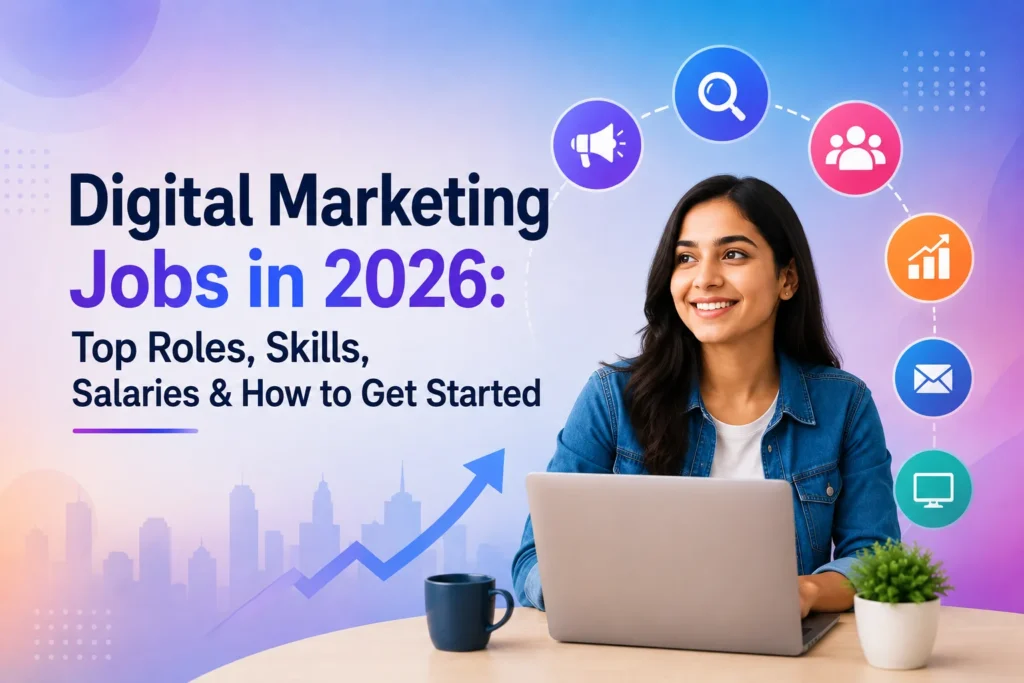
Digital Marketing Jobs in 2026: Top Roles, Skills, Salaries & How to Get Started

Digital marketing has become one of the most popular career fields for students, graduates, working professionals, and people looking to change careers. As businesses continue to invest in websites, search engines, social media, online advertising, content, and customer acquisition, the demand for digital marketing professionals continues to create new career opportunities.

In 2026, digital marketing is no longer limited to managing social media pages or creating advertisements. Companies are looking for professionals who can understand SEO, paid advertising, analytics, content, conversion optimization, AI tools, and overall digital strategy.

If you are planning to enter this field, understanding the different digital marketing jobs, required skills, salary expectations, and career paths can help you make a better decision.

Related Blogs

Why Are Digital Marketing Jobs in Demand?

Consumers increasingly use digital platforms to discover businesses, research products, compare services, read reviews, and make purchasing decisions.

This means businesses need professionals who can help them:

  • Increase online visibility
  • Generate leads
  • Drive website traffic
  • Manage social media
  • Run advertising campaigns
  • Improve search rankings
  • Create useful content
  • Analyze marketing performance
  • Increase conversions

The digital marketing industry also covers multiple specializations. This gives candidates the flexibility to choose a career path based on their interests and strengths.

Top Digital Marketing Jobs in 2026

There isn’t one single career in digital marketing. Instead, the industry offers several specialized roles.

1. Digital Marketing Executive

A Digital Marketing Executive is often responsible for managing multiple areas of online marketing.

Depending on the company, responsibilities may include SEO, social media, content marketing, email marketing, paid advertising, analytics, and website management.

This can be a good entry-level role for beginners because it provides exposure to multiple areas of digital marketing.

2. SEO Executive

SEO professionals focus on improving a website’s organic visibility in search engines.

Typical responsibilities include:

  • Keyword research
  • On-page optimization
  • Technical SEO
  • Content optimization
  • Internal linking
  • Competitor research
  • Local SEO
  • Search performance analysis

SEO can be a strong career option for people who enjoy research, analysis, content, and problem-solving.

3. Performance Marketing Specialist

Performance marketing focuses heavily on measurable business outcomes.

Professionals in this area may manage advertising campaigns across platforms such as Google Ads and social advertising platforms.

They work with metrics such as:

  • Click-through rate
  • Cost per click
  • Cost per lead
  • Conversion rate
  • Customer acquisition cost
  • Return on ad spend

Performance marketing can be particularly suitable for people who enjoy numbers, testing, optimization, and data-driven decision-making.

4. Social Media Marketing Executive

Social media professionals help businesses build and maintain their presence across platforms such as Instagram, Facebook, LinkedIn, and YouTube.

Their work can involve:

  • Content calendars
  • Social media strategy
  • Content publishing
  • Audience engagement
  • Campaign planning
  • Social media advertising
  • Performance analysis

Creativity and an understanding of audience behavior are important for this career path.

5. Content Marketing Specialist

Content marketers develop content that attracts, educates, and engages potential customers.

Content can include:

  • Blog articles
  • Website pages
  • Social media posts
  • Videos
  • Guides
  • Email newsletters
  • Landing-page copy

Modern content marketing increasingly requires an understanding of search intent, audience needs, brand positioning, and conversion goals.

6. PPC / Google Ads Specialist

PPC specialists manage paid search campaigns and help businesses acquire customers through online advertising.

Their responsibilities can include keyword research, campaign structure, ad creation, bidding, audience targeting, conversion tracking, and optimization.

A strong PPC professional needs both platform knowledge and an understanding of business economics.

7. Digital Marketing Analyst

Digital Marketing Analysts focus on understanding marketing data and turning it into actionable insights.

They may analyze:

  • Website traffic
  • Search performance
  • Advertising results
  • Lead generation
  • Conversion rates
  • Customer acquisition costs
  • Campaign performance

This role is particularly suitable for professionals who enjoy data and analytical problem-solving.

8. Digital Marketing Manager

After gaining experience, professionals can move into managerial positions.

A Digital Marketing Manager may oversee SEO, paid advertising, social media, content, email marketing, analytics, agencies, or internal marketing teams.

At this level, strategic thinking, leadership, budgeting, communication, and business understanding become increasingly important.

Digital Marketing Salary in 2026

Digital marketing salaries vary significantly depending on experience, location, specialization, company size, industry, and performance.

A general career progression in India may look like this:

ExperienceTypical Career Stage
0–1 yearIntern / Trainee / Junior Executive
1–3 yearsDigital Marketing Executive / SEO Executive / PPC Executive
3–5 yearsSpecialist / Senior Executive / Team Lead
5+ yearsManager / Strategist / Consultant

Entry-level salaries can vary widely, and specialized professionals with strong portfolios and measurable results can progress faster than candidates who rely only on certificates.

Instead of choosing a career based only on the starting salary, consider the skill-growth potential and specialization opportunities within the role.

How to Get Your First Digital Marketing Job

Getting your first job can be challenging if you have no practical experience. The good news is that you can start building experience before applying.

Step 1: Learn the Fundamentals

Start with the major areas of digital marketing:

SEO → Social Media → Content → Google Ads → Analytics → Email Marketing → Conversion Optimization

You don’t need to become an expert in everything immediately. Build a strong foundation first and then choose areas for deeper specialization.

Step 2: Work on Practical Projects

Projects are one of the best ways to demonstrate your skills.

You can create:

  • A personal website
  • An SEO project
  • A content marketing campaign
  • A social media strategy
  • A sample Google Ads campaign
  • A local SEO project
  • An analytics report

The objective is to show potential employers that you understand how marketing works in practice.

Step 3: Build a Portfolio

A portfolio can help bridge the gap between learning and professional experience.

Instead of simply saying, “I know SEO,” show what you have actually done.

For example:

Keyword research → Content strategy → On-page optimization → Search performance → Results

The same approach can be used for paid advertising, social media, content, and analytics projects.

Step 4: Look for Internships

Internships can provide exposure to real marketing workflows, clients, deadlines, tools, reporting, and teamwork.

For beginners, an internship can sometimes be more valuable than immediately focusing on a high starting salary.

Step 5: Keep Learning

Digital marketing changes quickly.

Search algorithms, advertising platforms, social media features, analytics tools, AI technologies, and consumer behavior continue to evolve.

Successful digital marketers therefore treat learning as an ongoing part of their career.

Should You Join a Digital Marketing Course?

Self-learning is possible, but structured training can make the learning process easier for beginners.

A good digital marketing course in Panvel or elsewhere should ideally combine theoretical concepts with practical assignments, tools, projects, and industry-oriented learning.

Before enrolling, evaluate:

  • Course curriculum
  • Practical projects
  • SEO training
  • Google Ads training
  • Social media marketing
  • Analytics
  • Content marketing
  • AI applications
  • Portfolio development
  • Internship opportunities
  • Trainer experience

The goal should be to develop skills that you can actually demonstrate to employers.

Conclusion

Digital marketing offers a wide range of career opportunities in 2026, from SEO and social media to performance marketing, content, analytics, and digital strategy.

The best way to enter the industry is to develop practical skills, work on projects, build a portfolio, gain real-world experience, and continuously update your knowledge.

If you’re considering a digital marketing course in Panvel, choose a program that focuses on practical learning rather than theory alone. And when evaluating a digital marketing institute in Panvel, look at its curriculum, trainers, projects, tools, internship opportunities, and overall learning support.

Whether you want to start your first job, change careers, freelance, or eventually build your own digital marketing business, developing the right skills can give you a strong foundation for a long-term career in the digital industry.

Enquire About Our Digital Marketing Courses

The form can be filled in the actual website URL.